Hampshire voters will shortly be going to the polls in important County Council elections. Who manages and delivers services for us locally really matters.
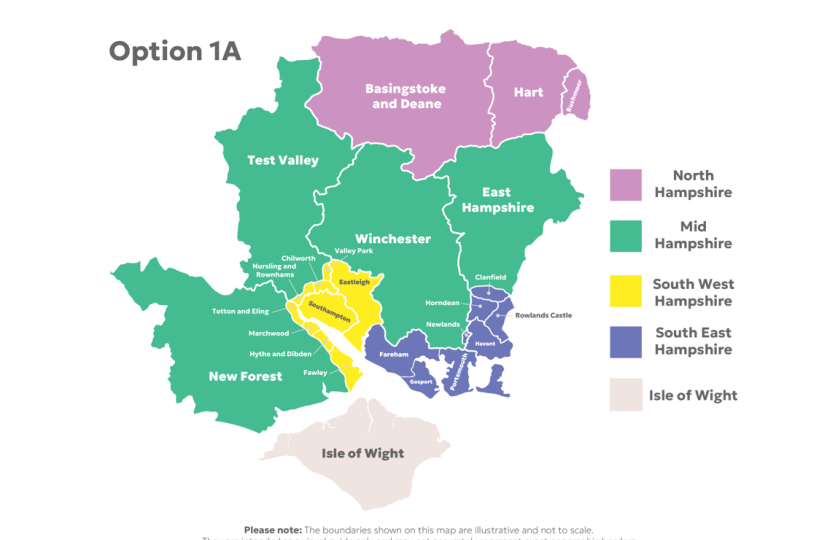
But there’s a big change coming in the shape of the government’s ‘reorganisation’ of Hampshire’s local authorities. As you will have read in the Herald and Post, 15 councils will be replaced by five new ‘unitary’ councils.
East Hampshire district will be split. Most of the area, including Alton and Petersfield, will become part of a vast new ‘Mid Hampshire’ council. But the parishes of Clanfield, Rowlands Castle and Horndean are instead to be allocated to a different new council area centred on Portsmouth, along with Havant, Gosport and Fareham.amosuir
Whenever this reorganisation plan comes up, I hear one question from residents again and again: “Why?”.
Actually, that is two questions. Why has the government come up with this particular geographical carve-up? But also: why are they doing it at all?
After all, it wasn’t such a compelling proposition as to have made it into the Labour manifesto. It is not something local people were asking for. And you would think the government have plenty of other things to worry about.
The main arguments from ministers are mostly about clarity (that in future no one will be confused about which tier of local government does what), and cost. Many people suspect there is another driver, too: to even further shift housing targets into rural areas.
The cost argument is not totally baseless. By moving some things from a district council level to a bigger area, you should be able to make some cost savings – so-called ‘economies of scale’.
But there will be cost increases, too – because some things that were done at the county level will now be done at smaller scale than before.
So the potential for net savings is about how big the unitary council areas are. Ministers had set a minimum population of 500,000 – but in the plan they are now implementing that has been watered down.
The ministers who initiated this project – Angela Rayner and Jim McMahon – are no longer in post. But the project goes on, even despite it no longer meeting its own stated logic.
Moreover, savings – even if they do materialise – would not come for some time, whereas the big costs of the reorganisation itself will come a lot sooner.
And there is an important question of identity. ‘East Hampshire’ may not appear as an entity on ancient maps. But many residents in the southern parishes of the district feel much more affinity with East Hampshire than they do with Portsmouth. Elsewhere in East Hants, residents face being part of a huge area with less in common than the existing district.
This is a plan that will break up our area, cause disruption and incur a lot of cost, all to pursue cost savings that are – at best – uncertain and years away.
The question “Why?” does not have an obvious answer.