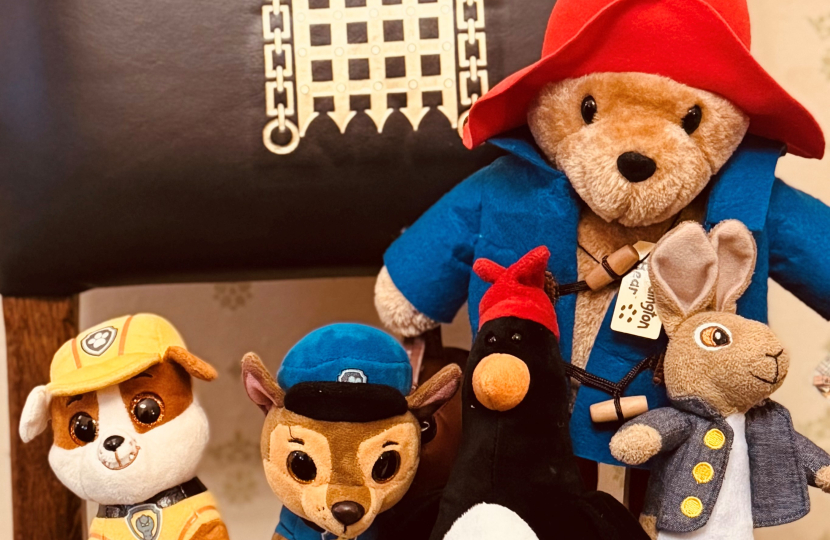
Paddington Bear, Bagpuss, The Flumps, Thomas the Tank Engine, and going back even further, Bill and Ben, The Magic Roundabout, and Pinky and Perky.
All names that, hopefully, whisk you back to childhood – when children’s TV amounted to just a couple of hours a day after school, on only a handful (or less) of channels, and was often something you watched together with your siblings (before we much used the word ‘siblings’).
Today, things could not be much more different. For pre-schoolers, Peppa Pig remains a giant of children’s television, joined by the Australian hit Bluey and the American juggernaut Paw Patrol. These titles consistently top the charts for popularity, though even identifying the ‘most watched’ is a tricky challenge, with children consuming so much content on-demand across different platforms.
Children’s media habits have transformed dramatically in recent years. Young people today have instant access to limitless viewing options at any time of day, on any device. Choice has been a game-changer, but it has also left us with an increasingly fragmented landscape.
If one child wants to watch SpongeBob SquarePants on Netflix, another wants to see Mr Beast on YouTube, and a third wants Peppa Pig on catch-up, they can all do so at the same time (provided the wi-fi behaves). And that freedom is, in many ways, wonderful.
But something has been lost - that shared experience of sitting down to watch the same programme at the same time (although of course this is not limited to children’s TV). And perhaps, too, a little of our cultural identity. How many home-grown UK children’s TV shows can the average child name today, aside from Peppa Pig?
Ofcom’s latest research shows that traditional TV viewing among children has dropped dramatically. YouTube is now the most-used platform by young people of all ages, with 88% of 3- to 17-year-olds using it last year.
But does this matter? Should we care that children have turned away from scheduled kids TV in favour of streaming?
Well, if we want programme-makers to continue producing high-quality British children’s TV, shows that both educate and entertain (Horrible Histories being a standout example) then we need to ensure they have the right conditions to do so. They must now compete not for a reliable scheduled slot on a children’s channel, but against hundreds of slick global productions on streaming platforms. It is becoming increasingly challenging for public-service broadcasters to create standout children’s content in such a crowded marketplace.
But this is just my view. What I want to know is what you think about children’s TV.
The Culture, Media and Sport Committee, on which I sit, has launched an inquiry into children’s TV and video content to explore these issues in depth. We want to understand whether parents are satisfied with the quality of the programmes their children watch today, which shows they consider the most educational, entertaining and popular, and which platforms children are using, along with much more besides.
To feed into this work, I’ve launched a short survey on my website. It would be great to hear from parents’ and grandparents’ and carers’ voices across East Hampshire so that this can be fed into the inquiry. You can access the survey here: www.damianhinds.com/campaigns